
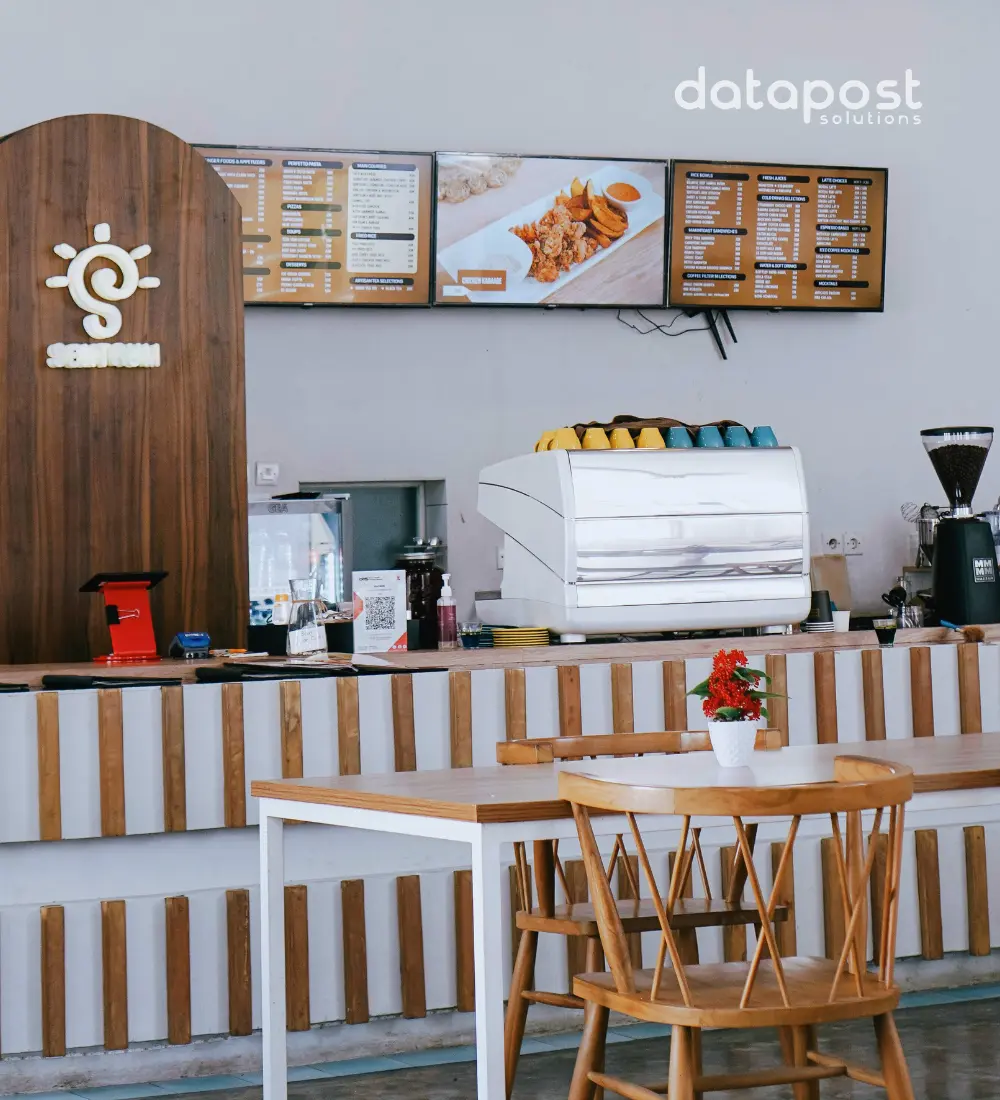
Digital Solutions for Every Industry
Businesses across industries use digital tools to improve operations and serve customers more efficiently. However, not every technology performs the same in every environment. Retail stores, banks, and quick-service restaurants each have distinct requirements and operational demands.
The key is choosing digital solutions that align with how your industry operates. When the right systems are in place, businesses can manage customer flow, communicate information clearly, and gain insight into performance.
In this guide, you’ll learn about the main types of digital solutions used across industries and how you can select the right combination for your business.
What Are Digital Solutions for Businesses?
Digital solutions use technology to support everyday business operations and customer interactions. They often combine hardware, software, and data reporting tools.
Common examples include:
- Digital signage displays
- Self-service kiosks
- Queue management systems
- Customer communication screens
- Analytics and reporting tools
With these systems, you can manage information in real time, communicate with your customers, and monitor performance across your locations.
Why do Industry-Specific Solutions Matter?
Each industry faces its own operational challenges that require unique solutions. And there’s no “one size fits all” for each industry, that’s why a tailored approach is imperative to the success of software adoption. By choosing solutions designed for your workflows, you can help your business operate more smoothly.
Industry-specific solutions help businesses:
- improve service efficiency
- reduce waiting times
- communicate clearly with customers
- gather useful operational data
For example, restaurants often need tools that speed up ordering and improve kitchen co-ordination. Financial institutions focus more on managing queues and guiding customers through service areas.
You can read more on the benefits of a digital solutions in our blog: How to Solve Common Business Challenges with Digital Signage.
How to Choose the Best Software for your Industry
Before investing in new technology, businesses should assess their specific needs. The steps below can help you decipher where to start and what will best improve your business operations.
Think about how digital solutions could enhance your overall strategy. Whether it’s providing promotional content in waiting areas or order kiosks in restaurants, look for ways to use technology that go beyond short-term promotions.
1. Identify Operational Challenges
Start by identifying the problems that need to be solved.
Common challenges include:
- long queues
- slow ordering processes
- unclear customer communication
- difficulty managing multiple locations
2. Understand the Customer Journey
Think about how your customers interact with your business, from their first contact through the completion of service.
Look for points where technology can simplify the process.
For example:
- kiosks can speed up ordering & improve order accuracy
- queue systems can organise waiting areas & reduce wait time
- digital signage can guide customers through service steps
3. Check Integration Compatibility
Digital tools should integrate with existing systems, such as point-of-sale platforms and reporting tools. Full-suite solutions enable businesses to manage content, devices, and data from a single platform rather than multiple disconnected systems.
Datapost supports leading hardware and software providers as our partners, for smooth and effective implementation.
4. Choose Scalable Technology
Businesses often expand to new locations or increase service capacity. Centralised platforms make it easier to manage multiple locations and maintain consistent customer experiences.
Finding a scalable software provider ensures that your new digital solution becomes your permanent digital solution. Digital solutions should support growth without requiring complete system replacements.
The Value of Integrated Digital Platforms
Many organisations use separate tools for signage, kiosks, and analytics. Managing these systems individually can be inefficient. A full-suite approach simplifies management and improves visibility across the organisation.
Integrated platforms allow businesses to:
- manage screens and devices centrally
- update content across locations quickly
- collect operational data in one place
- maintain consistent service processes
Key Digital Solutions Used Across Industries
Digital Signage
Digital signage uses screens to display information, promotions, or service updates. Businesses update content centrally and push changes to multiple locations at once.
Our digital signage platform provides a central hub for managing content, playlists and players for up to 20 screens. If your industry requires large-scale implementation and deployment, we recommend exploring enterprise solutions for digital signage.
Common uses include:
- menu boards in restaurants
- promotional displays in retail stores
- information screens in banks
- service updates in waiting areas
Because content can be updated instantly, businesses can respond quickly to operational needs or promotional campaigns. You can learn more about how to Maximise Your Success with Digital Signage on our blog.
Self-Service Terminals & Kiosks
Self-service terminals & kiosks allow customers to complete tasks independently without waiting for staff assistance.
Typical uses include:
- placing food orders
- checking in for appointments
- browsing product information
- making payments
Kiosks can reduce queues and free up staff to assist customers who need more support. They also help standardise processes such as ordering or registration.
Queue Management Systems
Queue management systems organise customer flow in busy environments.
Instead of waiting in physical lines, customers receive a number or join a digital queue. Screens or notifications inform them when it is their turn.
These systems help businesses:
- reduce perceived waiting time
- manage service counters more efficiently
- track peak service periods
Queue data can also help managers identify when additional staff are needed. If you’re running a small business with one location and a single service area, a cost-effective queueing solution would be the best fit. Learn more about How to Choose the Best Queue Management Tool on our blog.
Analytics and Reporting Tools
One of the best tools for customer insight is through advanced audience measurement. Datapost Vision is a camera analytics solution that analyses real-world audience behaviour, using object detection and computer vision technology.
Our reporting software delivers in-depth reports and analytics through detailed dashboards, empowering your business to advance with practical and impactful insights. Managers can use these insights to improve processes and make informed decisions.
Gain insight on:
- service times
- queue lengths
- screen engagement
- transaction patterns
Choose Industry-specific solutions
Technology plays an important role in modern business operations. And the most effective solutions are those tailored to your business and your industry-specific needs.
Retail stores focus on customer engagement and promotions. Financial institutions prioritise queue management and service organisation. Quick service restaurants rely on systems that improve order speed and accuracy.
By identifying operational challenges and selecting industry-appropriate solutions, businesses can improve efficiency, deliver better customer experiences, and gain clearer insights into their performance.